The Final Whistle Is Just the Beginning: Inside the Post-Game Content Rabbit Hole
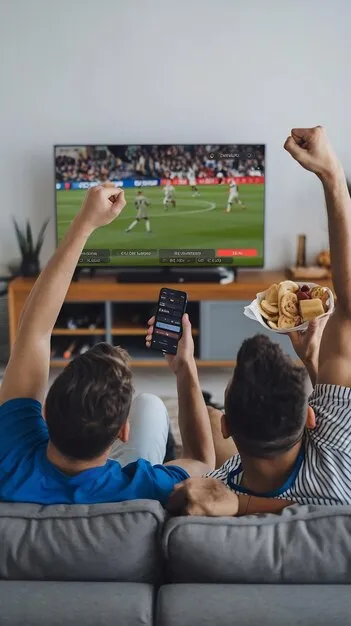
Photo: sports fan watching highlights on laptop phone late night couch, via img.freepik.com
The game ends at 10:47 PM. You should go to sleep. You have work tomorrow. You know this.
Instead, you open YouTube. There's already a 22-minute breakdown of the offensive line's performance in the fourth quarter, posted eleven minutes ago by a guy in Ohio with 340,000 subscribers and a green screen showing the stadium you just watched on TV. You click. Of course you click.
This is where American sports fandom lives now — not in the stands, not even entirely in front of the live broadcast, but in the sprawling, endlessly refreshing ecosystem of post-game content that follows every single game like a shadow that never quite fades.
The Appetite That Never Closes
Spend any time on platforms like YouTube, TikTok, or Twitter/X in the hour after a major sporting event and the volume of content is genuinely staggering. Full game replays. Condensed highlights. Player mic'd-up moments. Press conference clips. Reaction videos from fans in living rooms across the country. Tactical breakdowns. Stat deep-dives. Hot takes formatted in thirty seconds for people who can't commit to a full minute.
This isn't accidental. It's an ecosystem that has evolved specifically to serve a fan base that doesn't want the experience to end when the game does. And it's growing faster than almost any other segment of sports media.
The major platforms have noticed. YouTube's sports content consumption spikes dramatically in the 90 minutes after primetime games conclude. TikTok's algorithm actively surfaces game-related content to users who engaged with sports material earlier in the day, creating a feedback loop that can keep a fan scrolling through clips until well past midnight. The platforms aren't just hosting this content — they're engineering the conditions for it to thrive.
The Creator Economy Wearing a Jersey
What's changed in the last five years isn't just the quantity of post-game content — it's who's making it. The traditional media apparatus (ESPN's postgame show, local sports radio, the beat writer's notebook) still exists, but it's now surrounded by an enormous independent creator layer that often moves faster, goes deeper, and speaks more directly to specific fan communities.
Take the NFL film breakdown space. A decade ago, if you wanted serious schematic analysis of a game, you were reading a newspaper column or waiting for the coach's press conference. Today, there are dozens of independent creators who will have full positional breakdowns posted before midnight on game day — complete with telestration, formation identification, and the kind of granular detail that would have seemed like insider material reserved for coaching staffs.
These creators have built loyal audiences precisely because they fill a gap that broadcast television can't. The post-game show on a major network has to serve everyone, which means it serves no one particularly well. The independent creator can go forty-five minutes on nothing but the Cowboys' pass protection issues, and 200,000 people who care deeply about exactly that will watch every second of it.
Are We Watching Sports or Collecting Experiences?
Here's the question worth sitting with: at some point, does extended post-game consumption stop being about the sport and start being about something else entirely?
There's a psychological concept called "narrative extension" — the human tendency to want stories to continue, to resist endings, to seek resolution even when the formal conclusion has already arrived. Sports fans have always exhibited this behavior. The Monday morning quarterback conversation, the post-season bracket debate, the offseason trade speculation — none of this is new.
What's new is the infrastructure. The sheer volume and accessibility of post-game content means that narrative extension can now happen in real time, at industrial scale, with zero friction. You don't have to wait for the morning paper or the Tuesday sports radio segment. The content is there immediately, and it's designed to be consumed in sequence — one video auto-plays into another, one thread links to a deeper analysis, one clip surfaces a moment you missed in real time.
For some fans, this starts to feel less like engagement and more like compulsion. The game itself becomes almost a trigger event — the starting gun for a consumption marathon that's actually the main event.
The Platforms Building the Rabbit Hole
It's worth acknowledging the business model driving all of this. Post-game content is extraordinarily efficient from a platform perspective. It's cheap to produce (a creator with a laptop and a game pass subscription can make compelling content), it has a guaranteed audience (fans of the teams that just played), and it has a natural shelf life that keeps generating views for days or weeks after publication.
Major sports leagues have also gotten smarter about feeding this ecosystem. The NFL's official social channels, the NBA's highlight distribution strategy, MLB's embrace of short-form content — all of it is deliberately architected to extend fan engagement beyond the live window. The leagues understand that a fan who spends three hours watching a game and then two more hours consuming post-game content is worth significantly more in advertising terms than a fan who watches the game and turns the TV off.
At 247Sport.TV, we live in this world too. Round-the-clock sports coverage means the post-game period isn't downtime — it's prime time for a different kind of fan engagement. The analysis, the reaction, the deeper context: that's content with a real audience and a real purpose.
The Fan Who Can't Let Go
There's something genuinely beautiful about the post-game rabbit hole, even when it's excessive. It's evidence of how much people care. Nobody spends three hours after midnight watching film breakdowns of a team they're indifferent about. The obsession is, at its core, an expression of love — for the sport, for the team, for the community of people who feel exactly the same way.
But it's worth asking, occasionally, whether you're enhancing your connection to the game or substituting content consumption for something harder to find: the actual live, unmediated, unpredictable experience of watching sports without a plan for what comes next.
The rabbit hole will always be there. The game only happens once.
Maybe close the laptop. Just for tonight.