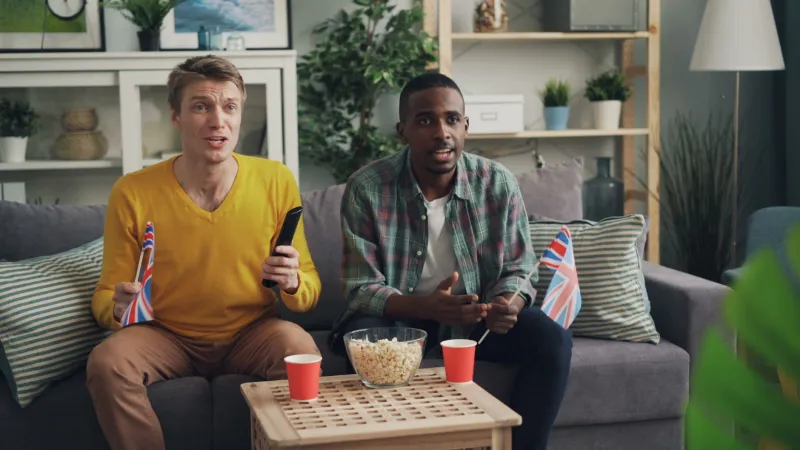
Alarm Set for 4 AM: Why American Soccer Fans Are Losing Sleep Over European Football
Somewhere in suburban Columbus, Ohio, a 34-year-old named Marcus is crawling out of bed at 4:45 on a Saturday morning. His wife doesn't stir. The dog lifts one eye, decides it's not worth it, and goes back to sleep. Marcus shuffles to the couch, fires up his streaming app, and settles in for a 5:30 AM kickoff between Liverpool and Arsenal. By the time his kids wake up for cartoons, he'll have watched a full 90 minutes of Premier League football, consumed two cups of coffee, and sent approximately 47 messages in a group chat with friends spread across four time zones.
This is not unusual behavior anymore. It's practically a lifestyle.
The Alarm Clock Revolution
European soccer has been nibbling at the edges of American sports culture for years, but something shifted in the last half-decade. The combination of expanded streaming access, social media FOMO, and a genuine generational embrace of the global game has created a new kind of US sports fan — one who doesn't just watch soccer, but structures their weekend mornings around it.
According to data from multiple streaming platforms, viewership of Premier League matches in the United States has grown dramatically year over year, with NBC's Peacock and NBC Sports reporting record numbers for marquee fixtures. La Liga, broadcast through ESPN+, and the UEFA Champions League, which landed a landmark deal with Paramount+ and CBS Sports, have both seen significant upticks in American audiences willing to tune in during what are, let's be honest, deeply inconvenient hours.
We're talking 5:30 AM Eastern for early Premier League kickoffs. Sometimes earlier for midweek Champions League replays or La Liga matches that tip off at 3 PM Madrid time — which lands at 9 AM on the East Coast and a brutal 6 AM out West. For fans in Los Angeles or Seattle, following Real Madrid in a Wednesday Champions League night match means setting that alarm for somewhere around 3 AM. And they're doing it.
Who Are These People?
The fans waking up for this stuff aren't fringe obsessives hiding in basements. They're teachers, nurses, software engineers, parents. What they share is a connection to a club that, in many cases, was sparked by a video game, a documentary, or a friend who wouldn't stop talking about Jürgen Klopp.
Take Priya, a 28-year-old from Atlanta who became a Manchester City supporter after watching a documentary on Pep Guardiola during the pandemic. "I started watching highlights on YouTube, then full matches on Peacock, and before I knew it I was setting a 6 AM alarm on a Sunday," she says. "My roommates think I'm insane. But it's the most alive I feel before noon."
Or consider Derek, a 41-year-old Chicagoan who grew up watching the Bears and Bulls but stumbled into FC Barcelona fandom through his Spanish-language night classes. "There's something about watching a match live that you just can't replicate with a replay," he explains. "If I don't watch it live, someone on Twitter — sorry, X — will spoil it before I finish my breakfast."
Spoiler culture is a real driver here. In an era when sports discourse moves at the speed of a push notification, watching anything on delay feels like walking into a conversation everyone else already finished.
The Streaming Arms Race
None of this would be possible without the streaming infrastructure that's quietly made European soccer more accessible than ever before. Peacock has invested heavily in its Premier League presentation, offering match-day whip-arounds, dedicated studio shows, and on-demand replays. CBS Sports and Paramount+ have gone all-in on Champions League coverage, bringing in talent like Kate Abdo and a rotating cast of former players that rivals anything you'd see on a European broadcast.
ESPN+ holds the La Liga rights and has made a genuine effort to contextualize Spanish football for American audiences — more explainer content, more historical framing, more reason for a casual fan to care about a Sevilla vs. Atletico Madrid fixture on a Tuesday morning.
The competition between these platforms for the soccer dollar is fierce, and American fans are arguably the biggest beneficiaries. Multiple subscription services mean fragmentation, sure — nobody loves paying for four different apps — but it also means each platform is fighting to justify its existence with quality coverage and reliable streams. At 5:30 AM when you're half-asleep and the match is about to kick off, you need that stream to work. And increasingly, it does.
Which League Is Winning the Pre-Dawn Battle?
If you're measuring pure American audience numbers, the Premier League is the undisputed champion of the overnight slot. The combination of English-language broadcasts, globally recognizable clubs, and genuinely elite-level drama has made it the default entry point for new soccer fans in the US. Manchester United, Liverpool, Chelsea, Arsenal — these are brands that transcend the sport and pull in casual viewers alongside the diehards.
But the Champions League has a different kind of gravity. There's nothing in American sports that quite replicates the knockout-round tension of a Champions League tie. The two-legged format, the away goals drama (RIP), the sheer scale of clubs involved — it creates appointment viewing that even non-soccer fans can get pulled into. The CBS Sports presentation has helped enormously, giving the competition a legitimacy and polish that's made it feel like a genuine rival to domestic leagues for fan attention.
La Liga is the interesting wildcard. It doesn't have the same mainstream foothold as the Premier League, but its fanbase in the US is intensely loyal and heavily influenced by the sport's Latino community, for whom clubs like Real Madrid and Barcelona carry deep cultural significance. Viewership tends to cluster around specific marquee fixtures — El Clásico being the obvious annual tentpole — rather than spreading evenly across the season.
The Cost of the Obsession
Let's not romanticize this too much. Waking up at 4 AM regularly is hard on your body. Fans who do it consistently talk about the fatigue, the impact on their work week, the gentle domestic negotiations required to keep a household from revolting against Saturday morning soccer alarms.
"My wife gave me a hard rule," Marcus admits. "One early alarm per weekend. I have to choose between Saturday and Sunday based on the fixtures." He pulls up his phone to show his scheduling system — a color-coded calendar that would make a project manager proud, mapping out Premier League kickoffs, Champions League nights, and the occasional La Liga fixture for the next two months.
It's a level of planning usually reserved for fantasy football drafts or March Madness brackets. But that's kind of the point. For these fans, European soccer isn't a side dish. It's the main event — even if the main event starts before the sun comes up.
Here at 247Sport.TV, we live for the fans who refuse to let geography or time zones get between them and the game they love. The alarm set for 4 AM isn't a sacrifice. It's a statement. And judging by the numbers, more Americans are making it every single season.