East Coast Bias Is Killing West Coast Sports Culture — And the Ratings Prove It
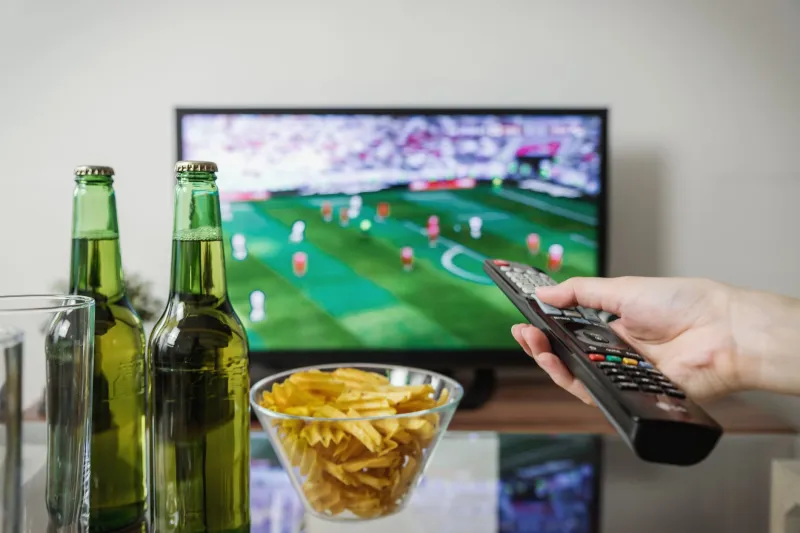
Somewhere in Pasadena right now, a Rams fan is eating lunch at her desk, headphones in, quietly streaming a game that most of the country is watching from their couch in prime time. She's not doing this because she wants to. She's doing this because the alternative — catching the late-night broadcast after a full workday — means staying up past midnight on a Tuesday just to watch her team play a divisional rival.
This isn't a niche complaint. This is the daily reality for tens of millions of sports fans living west of the Rockies, and it's been quietly eating away at West Coast sports culture for decades.
The Math Doesn't Lie
Let's just run the numbers for a second, because they're genuinely staggering.
A standard NFL Sunday Night Football kickoff at 8:20 PM Eastern doesn't end until roughly 11:30 PM on the East Coast. Fine. Annoying for a school night, but manageable. Now slide that same game three hours west. You're looking at a 5:20 PM kickoff in Los Angeles, Seattle, or San Francisco — right in the middle of the evening commute — and a game that wraps up around 8:30 PM local time.
Okay, that actually sounds pretty good, right? Except that's Sunday Night Football, the one showcase game the NFL actually cares about landing in front of a national audience. Most weeknight games — your Thursday Night Football matchups, your Monday night double-headers — are scheduled with East Coast prime time firmly in mind. That 8 PM ET slot? It's 5 PM in Portland. People are still at work. Kids are at soccer practice. Dinner hasn't happened yet.
And then there's the late game. The one the networks love to tack on as a "bonus" for West Coast fans — usually starting around 10 PM ET, which sounds generous until you realize that's 7 PM in California. It's practically an early bird special.
Follow the Money (You Always Have To)
So why does this keep happening? The answer, as it almost always is in professional sports, is money.
New York, Boston, Philadelphia, Chicago — these are the markets that drive advertising revenue. They're densely populated, they're media-saturated, and they've been the center of the American sports universe since before the Dodgers and Giants even thought about heading west. Networks sell ad slots based on projected viewership, and projected viewership is highest when the largest population centers are watching in prime time.
Eastern and Central time zones account for roughly 75% of the US population. That's just the reality. When a network executive is deciding whether to schedule a game at 8 PM ET or 8 PM PT, they're not thinking about the fan in Tacoma. They're thinking about the advertiser in Manhattan.
"It's pure market economics," said one sports media consultant who asked not to be named. "If you're a broadcast network and you can capture 200 million potential viewers in the Eastern and Central zones versus 75 million on the West Coast, the math writes itself. It's not malicious. It's just math."
Except it feels malicious when you're the one getting left out.
Real Fans, Real Consequences
Talk to West Coast sports fans long enough and you start hearing the same stories over and over again.
Daniel, a 34-year-old software engineer in Oakland, describes himself as a "recovering A's fan" who now watches most games on a 15-minute tape delay just so he can fast-forward through commercials and still get to bed before 1 AM. "I've got two kids," he says. "I can't be a real fan the way I used to be. The league doesn't make it possible."
Then there's Marta, a Seattle Seahawks season ticket holder who estimates she's attended maybe 40% of the games her tickets cover because the weeknight matchups — the ones that start at 5:15 PT — are nearly impossible to make it to straight from work. "I live 45 minutes from the stadium on a good day," she says. "A 5:15 kickoff is just not a real option for most people who have jobs."
These aren't edge cases. These are the structural conditions under which millions of West Coast fans experience their teams.
Streaming Is Starting to Crack the Code
Here's where things get at least a little interesting, because the traditional broadcast model is finally facing some genuine competition.
Platforms like Amazon Prime Video, Apple TV+, and Peacock have started to rethink the scheduling conversation — not out of altruism, but because their subscriber models don't depend on the same geographic prime-time logic that governs linear TV. When you're chasing global subscribers and domestic cord-cutters across every time zone, the calculus changes. A 6 PM PT kickoff isn't a disaster for a streaming platform the way it might be for NBC.
Apple's deal with MLS, for example, has already started experimenting with more regionally distributed scheduling — partly because soccer's international fan base demands it, and partly because the platform can serve hyper-targeted content to viewers regardless of when or where they're watching. It's not a revolution yet, but it's a direction.
For a platform like 247Sport.TV, which is built around the idea that sports don't stop just because the clock hits midnight, the West Coast problem is almost an opportunity. If you're already set up to deliver live coverage around the clock — whether it's a 4 AM Champions League match or a 10 PM PT NFL game that the East Coast has already gone to bed on — you're serving a fan base that the traditional broadcast model has consistently failed.
The Cultural Cost Nobody's Calculating
Beyond the individual inconvenience, there's a broader cultural erosion happening that doesn't show up in Nielsen ratings.
West Coast sports culture — and yes, it exists, despite what your uncle in New Jersey thinks — has historically been built around a different relationship with the game. Tailgates that start at noon because kickoff is at 10 AM local time. Bars that open early. Families that structure their Sundays around morning games rather than evening ones.
That culture has adapted. But adaptation isn't the same as thriving. When the scheduling structure consistently signals that your market is an afterthought, it shapes how fans relate to their teams, how local media covers sports, and how deeply rooted sports culture becomes in a community.
Los Angeles has been mocked for decades as a "bad sports town" — a place where fans leave games early and don't really care. But how much of that reputation is actually a product of scheduling structures that make it genuinely harder to be a fan in that market? It's worth asking.
Something Has to Give
The networks aren't going to fix this voluntarily. The leagues aren't going to push back on their broadcast partners without financial incentive to do so. And the East Coast majority isn't exactly lobbying for change.
But the streaming era is slowly, imperfectly, introducing a new variable into the equation. As more sports rights migrate to platforms that don't live and die by the 8 PM ET ad block, there's at least a theoretical future where scheduling decisions are made with the full national audience in mind — not just the 75% that happens to live east of the Mississippi.
Until then, the fan in Pasadena will keep eating lunch at her desk with her headphones in, watching her team play a game the rest of the country calls prime time. She's not asking for much. Just a kickoff she can actually watch.