You Didn't Mean to Become a Handball Fan. Your Phone Had Other Plans.
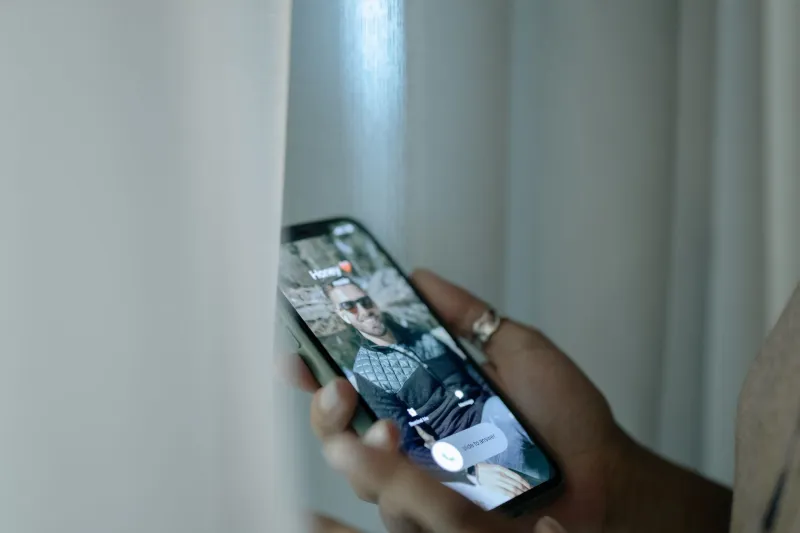
Ask Marcus, a 29-year-old from Charlotte, what sports he follows and he'll give you the standard American answer: NFL, college basketball, a little bit of MLB when the playoffs roll around. Standard stuff. Meat-and-potatoes sports consumption.
Then ask him why he spent forty minutes last February watching highlights from a European handball semifinal at 11 PM on a weeknight.
"I honestly don't know how it started," he says, laughing. "I got a notification about some crazy comeback finish. I clicked it. I watched the clip. And then I was just... in it."
Marcus is not unusual. He's a case study.
The Notification Machine
Sports apps have gotten aggressive. That's not a criticism — it's just the reality of the attention economy in 2024. ESPN, the Score, CBS Sports, Yahoo Sports, plus every league's native app, plus every social media platform running its own version of an algorithmic sports feed — they're all competing for the same real estate on your lock screen.
And the strategy isn't just to alert you about teams you already care about. It's to introduce you to things you didn't know you cared about, using the oldest trick in the engagement playbook: a genuinely incredible sports moment, stripped of all context, delivered at exactly the right moment of scroll vulnerability.
A buzzer-beater in a Turkish basketball league. A hat trick from a Liga MX striker you've never heard of. A photo finish at a cycling stage race in Spain. These notifications are algorithmically calibrated to the kind of content that makes people stop, look, and — crucially — keep looking.
It works. Embarrassingly well.
Accidental Fandom Is Real
The sports industry has a term floating around for what's happening to people like Marcus: accidental fandom. It describes the fan who didn't seek out a sport or a league but got pulled in through ambient exposure — a notification here, a recommended clip there, a Reddit thread that popped up in a feed.
This isn't entirely new. People have always stumbled into sports they didn't expect to love. The Olympics has been manufacturing accidental fans of obscure events for decades — nobody watches curling until they're watching curling at midnight during the Winter Games and suddenly they care desperately about whether that stone lands in the right spot.
But what's changed is the scale and the precision. Algorithms don't wait for the Olympics to come around every four years. They're running the accidental fandom playbook 24 hours a day, 365 days a year, across every sport on every continent. And with a platform like 247Sport.TV delivering content around the clock, there's always something to funnel those newly minted fans toward.
Leagues that would have been invisible to American audiences a decade ago now have genuine fan bases in the US — not because of big marketing campaigns, but because the algorithm decided their content was compelling and pushed it to the right people at the right time.
The Flip Side: Notification Fatigue
Here's where I'm going to get honest, because this is an opinion piece and honesty is the job.
For every Marcus who discovered a genuine new sports passion through a push notification, there are probably ten people who just turned their notifications off. Because sports apps have also been guilty of crying wolf — pinging you about things that don't remotely qualify as urgent, training you to ignore alerts that might actually matter.
Notification fatigue is a documented phenomenon, and sports apps are some of the worst offenders. When everything is urgent, nothing is. When every game gets a pre-game alert, a halftime alert, and a final score alert, you stop reading any of them. The algorithm that's supposed to be expanding your sports world ends up getting muted.
The platforms that are getting this right — and some are — understand that restraint is a feature. A notification that consistently delivers something genuinely surprising or exciting becomes something users look forward to. A notification that fires every twenty minutes becomes wallpaper.
Is This Actually Good for Sports?
Let's zoom out. The question underneath all of this is whether algorithmic sports discovery is a net positive for the broader sports ecosystem.
The optimistic argument: it's democratizing fandom. Small leagues, women's sports, international competitions — all of these categories have historically struggled to break through in the US market because they couldn't afford the promotional infrastructure that NFL or NBA content takes for granted. If an algorithm can surface a NWSL goal of the year to a million people who never would have searched for it, that's a genuine win for sports diversity.
The skeptical argument: it's building shallow engagement. Clicking on a handball highlight and watching it twice doesn't make you a handball fan. It makes you someone who watched a handball highlight. Real fandom is built on commitment, on following a team through bad stretches, on knowing the players' names and the stakes of the game. A notification can't manufacture that.
Both arguments have merit. The truth is probably somewhere in the middle — algorithmic nudges can open doors, but the fan has to decide to walk through them.
Marcus, for what it's worth, walked through. He's been following the EHF Champions League for eight months now. He has a favorite team. He set his own alerts.
The algorithm did its job. The rest was up to him.