Cash in the Quiet: Who's Actually Winning During Sports Broadcasting's Dead Zones
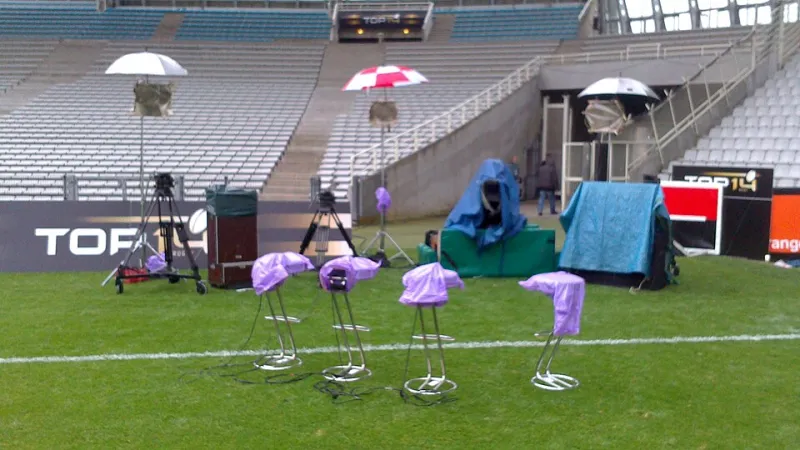
Photo: User:Trace, CC BY-SA 3.0, via Wikimedia Commons
It's the fourth quarter. Your team just called timeout with two minutes left. The broadcast cuts to a Chevrolet ad, then a DraftKings spot, then something for a prescription medication with a side effects list longer than the game recap. You pick up your phone. You open Twitter. You open Reddit. You open the team's Discord. You do anything except sit there watching the screen.
You are not alone. And somebody is making money off you right now — just not the network.
The Anatomy of Dead Air
Let's put some numbers on the silence. The average NFL broadcast runs roughly three hours and twelve minutes. The actual time the ball is in play? About eleven minutes. The rest is a combination of huddles, clock stoppages, replay reviews, injury timeouts, and commercial breaks — a lot of commercial breaks. The average NFL game contains somewhere between 20 and 25 commercial breaks totaling nearly an hour of airtime.
NBA games aren't much different. A 48-minute game regularly takes two and a half hours to complete, padded out by mandatory timeouts, challenge reviews, and end-of-game fouling sequences that turn the final two minutes into a 20-minute exercise in diminishing returns. Baseball, famously, has always been more intermission than action — which is part of why its ratings have been sliding for a decade.
All of that dead time represents a problem for traditional broadcasters and a massive opportunity for everyone else.
The Attention Exodus
Here's what the data keeps showing: viewers who leave during commercial breaks often don't come back. This isn't new information — the industry has known about the attention cliff for years — but the severity of the drift has accelerated as phone usage during live sports has become nearly universal.
A 2023 survey from Magna Global found that nearly 60% of sports viewers are actively using a second screen during commercial breaks. The question is what they're going to. And the answer, increasingly, is away from the official broadcast ecosystem entirely.
Podcasters figured this out early. Some of the most successful sports podcast operations — particularly in NBA and college football coverage — have built their entire content strategy around the gaps. They go live during games, specifically targeting the dead moments. Halftime. Timeout clusters. The interminable replay review where the referee disappears under a hood for four minutes while the broadcast plays generic music and the analysts say things nobody remembers.
The play-by-play podcast model is simple: be present in the moments the official broadcast abandons you, and fans will follow.
The Streaming Insurgency
On platforms like Twitch and YouTube Live, a cottage industry of sports reaction streamers has built real audiences — and real revenue — specifically by filling dead air with personality. These aren't bootleg game streams. They're reaction broadcasts: someone watching the same game you're watching, talking through the boring parts, keeping the energy up during the commercial breaks, and creating a communal viewing experience that the official broadcast, by design, cannot provide.
The economics are more interesting than they look. A mid-tier sports reaction streamer with 8,000 concurrent viewers during a primetime game is pulling in subscription revenue, bits, donations, and sponsorship deals from brands that have figured out this audience is highly engaged and impossible to reach through traditional advertising. These viewers are, by definition, the people who didn't walk away during the break. They stayed — just somewhere else.
What the Networks Are Doing With the Silence
To be fair, the major networks aren't completely asleep. The NFL's broadcast partners have experimented with alternate feeds — the Nickelodeon broadcast, the Manning brothers' ESPN+ simulcast — that try to reimagine what dead time can look like. Amazon Prime's Thursday Night Football has integrated more live data and social content into its production. The trend is clearly toward making the quiet moments louder.
But there's a structural problem. The commercial break isn't just filler — it's the entire financial model. A 30-second spot during a playoff game sells for hundreds of thousands of dollars. The network can't just eliminate the breaks to keep viewers engaged; those breaks are why the game is on television in the first place. So they're stuck trying to make the transition in and out of commercial feel less jarring while still cashing the check.
Streamers don't have that problem. When you're subscription-funded or creator-funded, the commercial break is your moment to shine rather than your moment to collect.
The Rain Delay Economy
Nothing illustrates the dead air opportunity quite like the rain delay. For traditional broadcast networks, a weather stoppage is a logistical nightmare — unplanned airtime with no scripted content, restless audiences, and sponsors who paid for a specific audience size that is now actively evaporating.
For independent baseball podcasters and streaming personalities, a rain delay is appointment viewing. Some of the most-shared sports content of the past few years has come out of rain delays — impromptu deep dives, historical trivia sessions, fan Q&As, and genuine unscripted conversations that feel nothing like the polished broadcast product. The chaos of the delay becomes the content.
At 247Sport.TV, we cover the game around the clock — and that means the boring parts too. Because the truth is, the boring parts aren't boring if you're in the right room with the right people. The silence between the plays is where some of the best sports conversation actually happens. The networks built a wall around it. Smart operators are building a door.
The Bottom Line
Dead air isn't dead. It's undervalued real estate in the most competitive attention economy in history. The fans aren't disappearing during timeouts because they're not engaged — they're disappearing because the official product stops serving them and something better is one tap away.
The question isn't whether alternative broadcasters will keep eating into those moments. They will. The question is whether traditional sports media figures out the value of the quiet before it's too late to claim it back.