Stop the Tape: Why Hardcore Fans Are Learning to Love the Blur
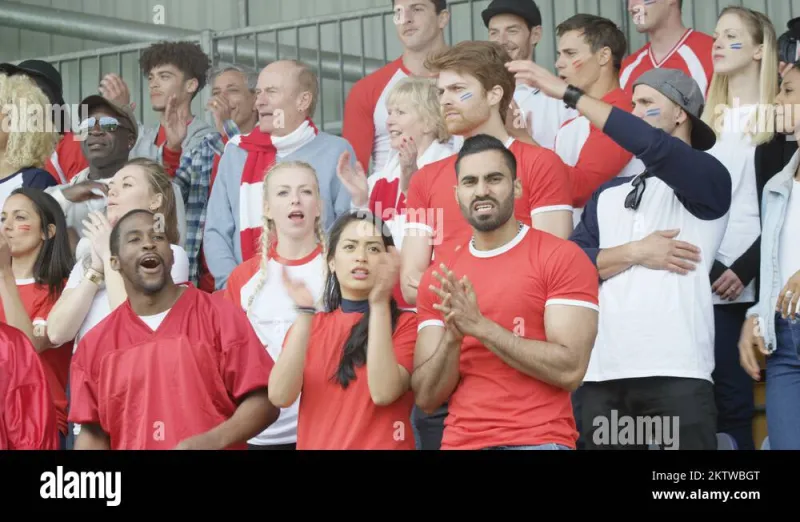
Photo: sports fan emotional reaction stadium crowd live game, via c8.alamy.com
There's a moment — and if you're a real sports fan, you know exactly the one — where something happens on the field and your body reacts before your brain does. Your arms go up. Your voice goes somewhere you didn't plan. The person next to you grabs your shoulder. For about three seconds, the world is pure, unprocessed chaos.
Then the replay hits.
And something dies a little.
The Problem With Perfect
We live in an era of unprecedented visual access to sports. Eighteen camera angles. Pylon cams. Skycams. Eye-in-the-sky drones. The NFL alone deploys over 100 cameras for a single game broadcast. The NBA has tracking systems that can reconstruct every moment of a play in 3D. On paper, this is incredible. In practice, for a certain breed of dedicated fan, it's quietly becoming a problem.
The issue isn't the technology itself. It's what that technology does to memory.
When you watch a Hail Mary touchdown in real time from the upper deck — or even from your couch — you see it at human speed, from a human angle, with human imperfection. You might not see exactly where the receiver's feet landed. You might not catch the deflection. But you feel it completely. That incomplete information becomes part of the story your brain tells itself. It's your memory. It belongs to you.
The moment the broadcast cuts to the slow-motion overhead angle and the analyst starts diagramming what happened, that memory gets quietly overwritten. Your version gets replaced by the broadcast's version. And the broadcast's version, however technically superior, is somehow colder.
The Replay Industrial Complex
This isn't just a philosophical gripe. There's a real machine behind it. Sports networks — and increasingly, streaming platforms — have built entire content ecosystems around the concept of the enhanced replay. It's not enough to show you what happened. They need to show you what really happened, from every conceivable direction, at every conceivable speed.
This serves a purpose, obviously. Analysis drives engagement. It fills airtime. It gives commentators something to do besides sit in silence. And for casual viewers trying to understand a sport, the breakdown is genuinely useful.
But for the fan who already knows what a pick-six looks like — who has watched 400 of them — the constant interruption of the live experience with forensic dissection is starting to feel like someone explaining the punchline of a joke you already laughed at.
A Growing Quiet Resistance
Talk to enough serious fans and a pattern emerges. More people are actively choosing not to watch certain replays. Not because they're uninterested in the sport, but because they want to protect something.
There's a contingent of NBA fans — particularly those who follow teams on the road, watching games solo or in small groups — who have started muting the broadcast the moment a big play happens and a replay is coming. They want to sit with their first impression for a minute longer before the talking heads start dissecting it.
Some college football fans in stadium crowds are actively choosing to avoid looking at the jumbotron replay. Their reasoning is surprisingly consistent: I was here. I saw it. I don't want the camera to tell me what I saw.
It sounds almost irrational. But there's real psychology behind it. Studies on memory reconsolidation suggest that every time you revisit a memory, you're slightly rewriting it. The replay doesn't just show you the moment again — it inserts itself into your memory of the moment. Over time, fans who watch a lot of replay-heavy coverage often find that their clearest memories of big moments are actually the broadcast versions, not their lived experience.
What the Broadcast Gets Wrong
Here's the thing about the perfect angle: it's never really your angle.
The pylon cam catches the toe drag. The overhead shows the clear pass interference. The slow-mo reveals the ball never crossed the plane. All of that is true and correct and useful for officiating and analysis. But it's constructed truth — the broadcast's curated version of an event that thousands of people experienced simultaneously and differently.
Live sports, at their best, are a shared hallucination. Fifty thousand people in a stadium see the same play from fifty thousand slightly different positions. They all come away with slightly different stories. That's not a flaw. That's the whole point. It's why we still go to games in person in an era where the home broadcast is objectively a better viewing experience by every technical measure.
The replay, with its god-mode clarity, collapses all of that into a single authoritative version. And in doing so, it quietly diminishes what made the moment matter.
Living With the Blur
None of this means replays are going away. They won't. The economics of sports broadcasting depend on them too heavily, and the majority of viewers genuinely love the additional detail.
But there's something worth paying attention to in the growing number of fans who are pushing back — who are choosing the blur over the breakdown, the raw memory over the corrected one. They're not Luddites. They're not anti-technology. They're fans who have figured out something that the broadcast industry hasn't fully reckoned with yet: the experience of watching sports isn't just about information. It's about feeling.
And sometimes, the most honest thing a replay can do is stay in the can.
At 247Sport.TV, we're built around giving fans access to everything, around the clock. But even we can appreciate the strange wisdom of the fan who covers their eyes during the slow-mo. The game gave you something in that moment. You don't owe the broadcast room permission to take it back.