Wired and Wagering: How Round-the-Clock Sports Coverage Is Changing the Way Americans Consume the Game
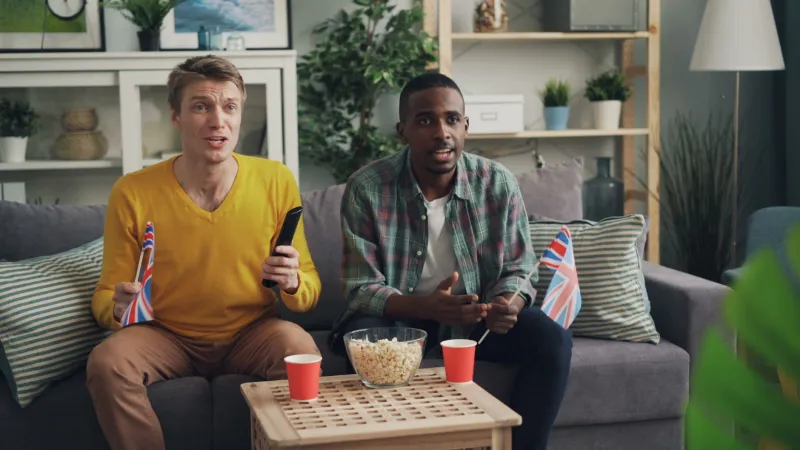
There's a guy in Columbus, Ohio — let's call him Derek — who hasn't watched a sporting event without his phone in his hand for the better part of three years. Not a single one. While his team is on the screen, he's scanning live odds, refreshing injury updates, and toggling between three different betting apps. He's not unusual anymore. He's the new normal.
The convergence of round-the-clock sports streaming and legal, mobile sports wagering has quietly reshaped what it means to be a fan in America. And the more experts look at it, the more complicated the picture gets.
The Always-On Environment Nobody Planned For
When states started legalizing sports betting after the Supreme Court's 2018 Murphy v. NCAA ruling, nobody sat down and drew up a blueprint for what American fan culture would look like five years later. It just... happened. Platforms began streaming more content. Betting markets opened up to cover not just game outcomes but individual quarters, drives, at-bats, and possessions. The feedback loop got tighter and tighter.
Today, a dedicated sports fan doesn't experience a dead moment. There's always a game somewhere. There's always a line moving. There's always a notification.
"What we've essentially built is a system that is optimized for continuous engagement," says Dr. Melissa Hartley, a sports psychologist based in Chicago who works with both elite athletes and recreational fans. "The architecture of these platforms — streaming, alerts, live odds — is designed to keep your attention perpetually activated. That's not an accident."
She's careful not to cast the entire industry as predatory. But she does point out that the human brain wasn't exactly engineered for a world where a sporting event is always one tap away and there's money riding on every possession.
The Dopamine Economy of Live Sports
Here's the thing about live sports that makes it uniquely powerful as a psychological hook: uncertainty. The brain's reward system doesn't just respond to winning — it responds to not knowing. Variable reward schedules, the same mechanism that makes slot machines so compelling, are baked into the very nature of athletic competition.
Add a financial stake to that uncertainty, and you've amplified the neurological response considerably. Dr. James Okafor, an addiction psychiatrist at a treatment center in Atlanta, explains it plainly: "When you have money on a game and you're watching it live, you're not just a spectator anymore. Your nervous system is in it. Every play becomes personal."
That shift — from observer to participant — is something the betting industry has leaned into hard. In-game wagering, often called live betting, now accounts for a massive and growing share of total sports betting handle in the US. Sportsbooks have made it seamless. You're watching a drive stall at the 30-yard line, and before the punt team even gets on the field, you can bet on whether the defense will hold. The game and the wager are now one continuous experience.
For most people, that's just a more immersive way to enjoy football. For a meaningful subset, it becomes something harder to manage.
When Engagement Becomes Something Else
The National Council on Problem Gambling estimates that roughly 1% of the US population meets the clinical criteria for gambling disorder — but that number is widely considered to be an undercount, particularly given how rapidly the legal betting landscape has expanded. Calls to the council's helpline have increased significantly since 2018.
What makes sports betting particularly tricky to categorize, Okafor says, is that it lives inside an activity people already love. "Nobody thinks of themselves as a problem gambler when they're watching their team play. They think of themselves as a fan. The betting is just part of the experience now. That makes it harder to recognize when things have shifted."
The always-on nature of modern sports media compounds this. When there's no natural stopping point — no moment where the television guide says nothing is on — there's no built-in pause for reflection. The next game is always queuing up. The next market is always open.
Platforms, Responsibility, and the Gray Zone
It's worth being honest about something: streaming platforms and sports media outlets, including ones like this very site, are part of this ecosystem. Continuous coverage is the product. Engagement is the goal. That doesn't make the content inherently harmful — most people consume sports media the same way they always have, just with more options and better access.
But it does raise legitimate questions about where editorial responsibility begins and ends. Should platforms that benefit from hyper-engaged audiences be doing more to surface responsible gambling resources? Should live betting integrations come with friction — intentional pauses or spending prompts — rather than being frictionlessly embedded in the viewing experience?
Some in the industry are starting to ask those questions openly. A handful of sportsbooks have introduced voluntary spending limits and self-exclusion tools that are more prominent than they used to be. A few streaming services have begun experimenting with viewing habit summaries — the sports equivalent of the screen time reports on your iPhone.
Dr. Hartley thinks it's a start, but emphasizes that these tools only work if people use them. "Awareness is the first step. But awareness alone doesn't change behavior when you've got a system that's constantly pulling you back in."
What Healthy Fan Culture Actually Looks Like
None of this is an argument for tuning out. Sports are genuinely wonderful. Community, competition, the shared drama of a close game — that stuff matters, and it's real. The goal isn't to make people less enthusiastic. It's to make sure enthusiasm doesn't quietly tip into something that costs more than it gives back.
For the Derek in Columbus — and the millions of fans like him — the question isn't really about sports at all. It's about intentionality. Are you watching because you want to, or because the platform has made not watching feel like the harder option?
Sports psychologists suggest a few practical anchors: setting designated off hours from betting apps, treating a wager-free viewing session as a deliberate choice rather than a deprivation, and periodically asking yourself whether the experience is still fun or whether it's started to feel more like an obligation.
The games aren't going anywhere. The coverage isn't slowing down. If anything, it's going to keep expanding — more leagues, more markets, more ways to stay locked in around the clock. The fans who navigate that landscape best will be the ones who stay conscious of how they're moving through it.
Because being a die-hard sports fan is a great thing to be. Just make sure it's still you doing the choosing.
If you or someone you know is struggling with problem gambling, the National Problem Gambling Helpline is available 24/7 at 1-800-522-4700.